
6 MÓN NGON ĐỘC ĐÁO CỦA NHẬT BẢN CÓ THỂ BẠN CHƯA BIẾT
Shiso maki, Hittsumi-jiru, Harako meshi,...những món ăn độc đáo được chuyên gia ẩm thực Anthony Bourdain của CNN khám phá ở vùng Honshu nơi có nền ẩm thực lâu đời và đa dạng.
Với một nền ẩm thực lâu đời và đa dạng, đảo Honshu có những món ăn truyền thống rất đặc biệt và bổ dưỡng. Nhiều món ăn tại đây khá nổi tiếng ở Nhật nhưng không phải tín đồ ẩm thực Nhật nào trên thế giới cũng biết tới. Chuyên gia Anthony Bourdain của chuyên mục Ẩm thực CNN sẽ giúp bạn khám phá 6 món ăn độc đáo nơi đây.
Shiso maki: Tía tô cuộn hạt óc chó và tương miso
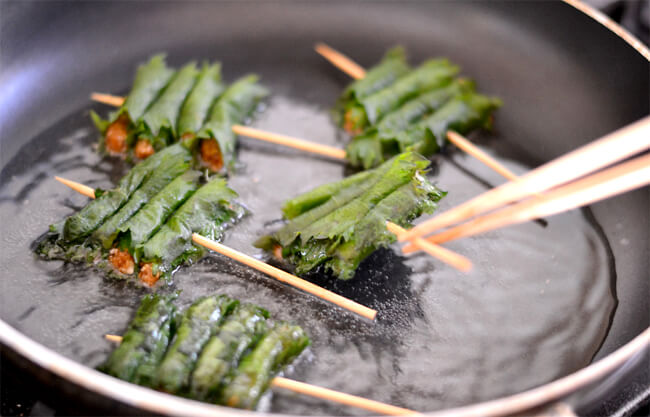
Hạt óc chó, một đặc sản địa phương của Tohuko, phía bắc đảo Honshu. Hạt sau khi nướng và nghiền nhuyễn sẽ thành một hỗn hợp đặc biệt thơm ngậy. Hỗn hợp này kết hợp cùng với một đặc sản địa phương khác là tương miso và trộn cùng vừng rang tạo thành phần nhân hấp dẫn của món shiso maki. Phần nhân có vị mặn ngọt thơm ngon này có thể được gia giảm thêm một ít shichimi togarashi (ớt bột 7 vị) để thêm chút cay nồng. Món này đặc biệt phổ biến vào mùa hè, mùa của lá tía tô. Phần nhân hấp dẫn trên được nặn thành từng miếng nhỏ rồi gói trong lá tía tô và rán chín trong dầu mè để thành món shiso maki hoàn hảo. Shiso maki có thể làm đồ nhắm với bia đá, rượu sake lạnh hay trà xanh nóng.
Hittsumi-jiru: Mì thịt heo
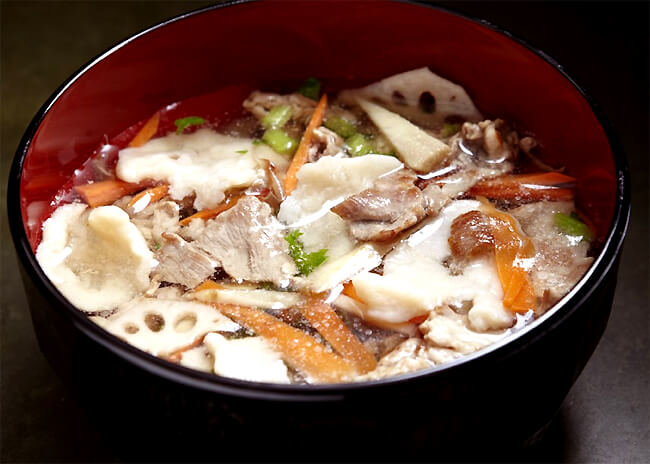
Hittsumi-jiru là món ăn truyền thống và thường có mặt tại các sự kiện hay lễ hội ở đây. Hittsumi nghĩa là "véo" theo tiếng địa phương và chính là từ mô tả cách làm ra sợi mì. Để làm mì, có đầu bếp "véo" từng sợi bột rồi thả luôn vào nồi nước dùng, nhưng có đầu bếp lại tạo hình và luộc sơ mì rồi mới cho vào súp ngay trước khi ăn. Mì không được luộc sơ khi thả vào nồi nước dùng sẽ mềm và làm nước dùng trở nên đặc sánh, hơi giống món bánh canh của Việt Nam. Nếu mì trước khi cho vào nước dùng được luộc sơ thường cứng và dai hơn, nước súp cũng loãng hơn. Do đó, tùy khẩu vị của người ăn mà mì sẽ được chế biến theo các cách khác nhau. Một bát mì Hittsumi-jiru có đầy đủ thịt heo, rau xanh, nấm và các rau củ khác với nước dùng thơm ngon đặc sánh.
Harako meshi: Cơm cá hồi và trứng cá
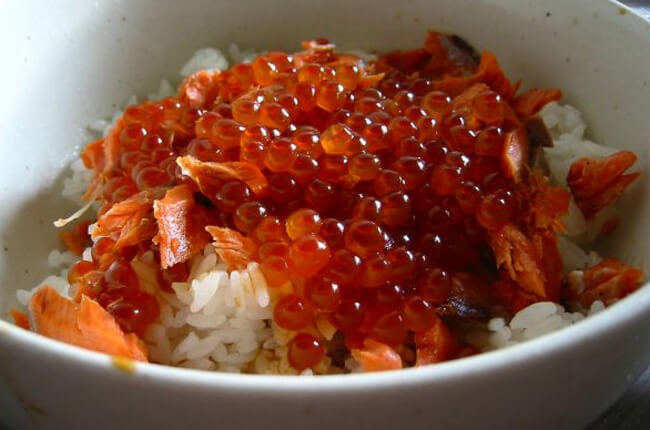
Hơn 5.000 năm trước đây, những người dân của Tohoku đã bắt đầu đánh bắt cá hồi. Do đó, cá hồi đóng vai trò quan trọng trong ẩm thực nơi đây và món harako meshi là một ví dụ điển hình. Món ăn này dường như rất thông dụng và nhiều người đã được thử qua, nhưng tại đây, mỗi gia đình đều có một công thức chế biến riêng. Thông thường, cá hồi được xé nhỏ và trộn vào nồi cơm một vài phút trước thời điểm cơm chín. Sau đó, bát cơm trộn cá hồi harako meshi sẽ được hoàn tất với một thìa trứng cá đỏ au rắc trên cùng. Tuy nhiên, trong những dịp đặc biệt, món ăn này sẽ được bày trên đĩa lớn, trang trí thêm vài lát cá hồi chín và một ít trứng cá.
Kaki no dote nabe: Lẩu hàu
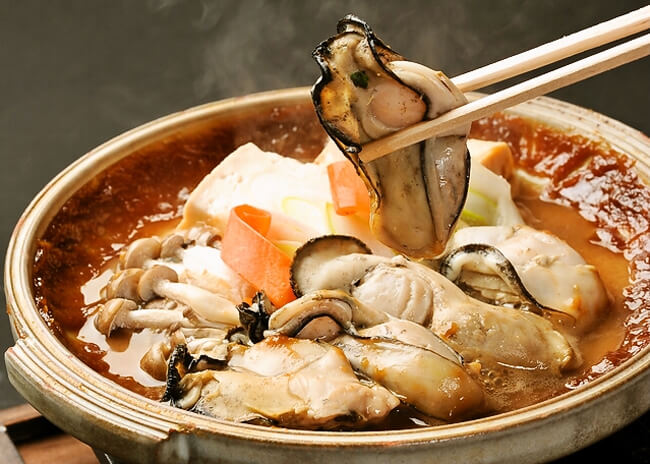
Món ăn này được đặt tên là nabe (lẩu hàu) dote (bờ sông) do nhìn bên ngoài, nồi lẩu được viền quanh bởi tương miso loại đậm đặc tựa như một bờ sông thu nhỏ. Khi nước dùng bắt đầu sôi lăn tăn, tương miso được nêm dần vào nước dùng, từng chút từng chút một, làm nước dùng thêm đặc và đậm đà (tựa như phù sa ven sông hòa vào dòng nước sau một cơn mưa lớn). Rau củ có thể được cho vào nồi ngay từ đầu. Hàu sẽ ngon nhất nếu để chín tái, và thưởng thức với tương miso bám quanh thành nồi.
Matsu no mi shira ae, kaki utsuwa: Hồng nhồi hoa quả với sốt hạt thông
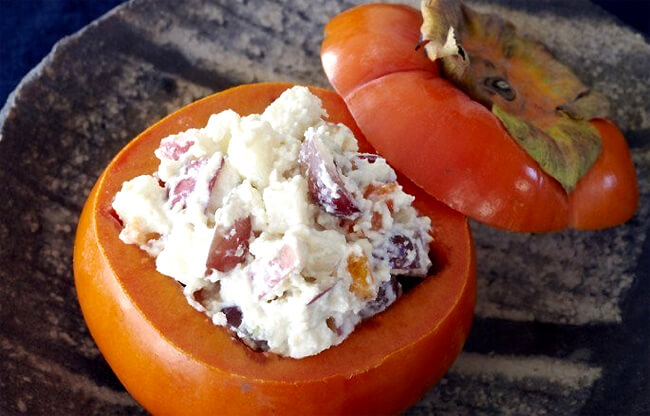
Quả hồng được cắt phần đầu, thành một chiếc bát nhỏ đựng chính ruột hồng hay cùng với các loại trái cây mùa thu khác như nho, lê hay táo. Lớp nhân này được rưới loại sốt truyền thống shira ae gồm có hạt thông và đậu phụ. Để làm ra loại sốt béo ngậy, một số đầu bếp chỉ nghiền đậu phụ rồi thêm vào gia vị là rượu mirin và usukuchi shoyu (tương shoyu có màu nhạt). Một số đầu bếp khác sẽ thêm vào đậu phụ nghiền tương miso ngọt hay một thìa sốt vừng. Đầu bếp sẽ thêm hạt thông nghiền để làm nổi bật shira ae của họ.
Shake no kobu maki: Rong biển tươi cuốn cá hồi
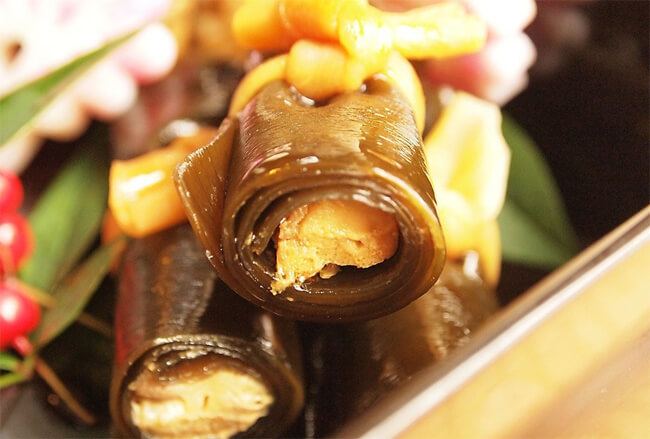
Rong biển được cuốn lại và thắt bằng ruy-băng làm từ bầu hay bí. Món này được thưởng thức khắp Nhật Bản, đặc biệt là trong ngày đầu năm. Ở Tohoku, nhân của shake no kobu maki là migaki nishin - cá trích muối khô. Đây là món khai vị trong các ngày lễ ở Tohoku, đi kèm với rượu sake. Những cuộn rong biển này cũng được thưởng thức như một món ăn kèm trong bữa tối.
Nguon: dulichrongachau
Rong biển được cuốn lại và thắt bằng ruy-băng làm từ bầu hay bí. Món này được thưởng thức khắp Nhật Bản, đặc biệt là trong ngày đầu năm. Ở Tohoku, nhân của shake no kobu maki là migaki nishin - cá trích muối khô. Đây là món khai vị trong các ngày lễ ở Tohoku, đi kèm với rượu sake. Những cuộn rong biển này cũng được thưởng thức như một món ăn kèm trong bữa tối.
Nguon: dulichrongachau