
Tham quan văn miếu từ A-Z
Văn miếu quốc tử giám
1. Lịch sử Văn Miếu-Quốc Tử Giám
Văn Miếu – Quốc Tử Giám là quần thể di tích đa dạng và phong phú hàng đầu của thủ đô Hà Nội, nằm ở phía nam Kinh thành Thăng Long. Quần thể kiến trúc Văn Miếu – Quốc Tử Giám bao gồm: hồ Văn, khu Văn Miếu – Quốc Tử Giám và vườn Giám; trong đó, kiến trúc chủ thể là Văn Miếu (nơi thờ Khổng Tử) và Quốc Tử Giám. Với hơn 700 năm hoạt động, đã đào tạo hàng nghìn nhân tài cho đất nước, Quốc Tử Giám được coi như là trường đại học đầu tiên của Việt Nam và cũng là biểu tượng cho nền khoa cử thời phong kiến. Từng là nơi các sĩ tử đến "cầu may" trước mỗi kỳ thi bằng cách vuốt đầu rùa tại các bia tiến sĩ. Tuy nhiên ngày nay, để bảo tồn di tích, một hàng rào được thiết lập và các sĩ tử không còn làm nghi thức cầu may như trước nữa. Nơi đây đã được Thủ tướng Chính phủ Việt Nam đưa vào danh sách xếp hạng 23 Di tích quốc gia đặc biệt. Khuê Văn Các tại Văn Miếu - Quốc Tử Giám được chọn là biểu tượng của Thủ đô theo Luật Thủ đô được, 82 tấm bia Tiến sĩ tại Văn Miếu - Quốc Tử Giám được UNESCO công nhận là Di sản tư liệu và ghi vào danh mục Ký ức thế giới toàn cầu.

Được khởi công xây dựng từ tháng 8 năm 1070 dưới thời vua Lý Thánh Tông, Đại Việt sử ký toàn thư (Nhà xuất bản Khoa học xã hội, Hà Nội, tập 1, T.234) chép: "Mùa thu tháng 8, dựng Văn Miếu, đắp tượng, Khổng Tử, Chu Công và Tứ phối, vẽ tượng Thất thập nhị hiền, bốn mùa cúng tế. Hoàng thái tử đến đây học."[a] Như vậy, ngoài chức năng thờ các bậc tiên thánh, tiên sư của đạo Nho, Văn Miếu còn mang chức năng của một trường học hoàng gia mà học trò đầu tiên là Thái tử Lý Càn Đức (tức vua Lý Nhân Tông), con trai vua Lý Thánh Tông với Nguyên phi Ỷ Lan, lúc đó mới 5 tuổi.
Năm 1076, vua Lý Nhân Tông cho xây nhà Quốc Tử Giám – trường học cao cấp đầu tiên của nước ta, nằm sau Văn Miếu. Khi mới xây dựng, trường chỉ dành riêng cho các hoàng tử con vua, hoàng thân, con các đại thần, quý tộc (nên gọi tên là Quốc Tử). Năm (1806) mở khoa thi thứ hai chọn người đỗ cao vào Hàn Lâm viện. Mạc Hiển Tích đã vinh dự được bổ nhiệm làm Hàn Lâm học sĩ đầu tiên.
Đến đời Lý Anh Tông (1138-1175), Tô Hiến Thành làm phụ chính, năm 1156, cải cách mở rộng việc học, Văn Miếu chỉ còn thờ một mình Khổng Tử. Sang triều Trần, khoa nho học đầu tiên mở năm 1232, đại khoa gọi là thi Thái học sinh, người đỗ lấy làm tam giáp, sau đặt tam khôi: trạng nguyên, bảng nhãn và thám hoa. Quốc Tử Giám được mở rộng, tuyển cả con thường dân học giỏi (nên gọi là nhà Quốc Học).
Sử gia Lê Văn Hưu đỗ bảng nhãn khoa Đinh Mùi (1247), Mạc Đĩnh Chi đỗ trạng nguyên khoa Giáp Dần (1304) dưới triều Trần. Đời Trần Nghệ Tông (1370-1372) nhà nho Chu Văn An từng làm Tư nghiệp Quốc Tử Giám (tương đương với chức Hiệu trưởng ngày nay), trực tiếp dạy dỗ các hoàng tử dưới triều Trần Minh Tông (1314-1329) là người Nam đầu tiên được đưa vào thờ ở Văn Miếu cùng với Khổng Tử.


Sang thời Hậu Lê, Nho giáo rất thịnh hành. Vào năm 1484, Lê Thánh Tông cho dựng bia của những người thi đỗ Tiến sĩ từ khoa thi năm 1442 trở đi (chủ trương đã đề ra năm 1442 nhưng chưa thực hiện được). Mỗi khoa, một tấm bia được đặt trên lưng rùa. Tới năm đó, nhà Lê đã tổ chức được 12 khoa thi cao cấp. Lê Thánh Tông (1460-1497) đã tổ chức đều đặn cứ ba năm một lần, đúng 12 khoa thi.
Năm 1762, Lê Hiển Tông cho sửa lại là Quốc Tử Giám – cơ sở đào tạo và giáo dục cao cấp của triều đình.
Năm 1802, vua Gia Long ấn định đây là Văn Miếu Hà Nội. Tổng trấn Bắc thành Nguyễn Văn Thành cho xây thêm Khuê Văn các bên cạnh giếng vuông. Như vậy vào đầu thời Nguyễn, Văn Miếu Thăng Long đã một lần được sửa sang chỉ còn là Văn Miếu của trấn Bắc thành, sau đổi thành Văn Miếu Hà Nội. Còn Quốc Tử Giám thì đổi thành học đường của phủ Hoài Đức và sau đó tại khu vực này xây đền Khải Thánh để thờ cha mẹ Khổng Tử.
Đầu năm 1947, thực dân Pháp nã đạn đại bác làm đổ sập căn nhà, chỉ còn cái nền với hai cột đá và 4 nghiên đá. Ngày nay toàn bộ khu Thái học được xây dựng với diện tích 1530m² trên tổng diện tích 6150m² gồm các công trình kiến trúc chính là Tiền đường, Hậu đường, Tả vu, Hữu vu, nhà chuông, nhà trống được mô phỏng theo kiến trúc truyền thống trên nền đất xưa của Quốc Tử Giám.
2. Địa chỉ Văn Miếu
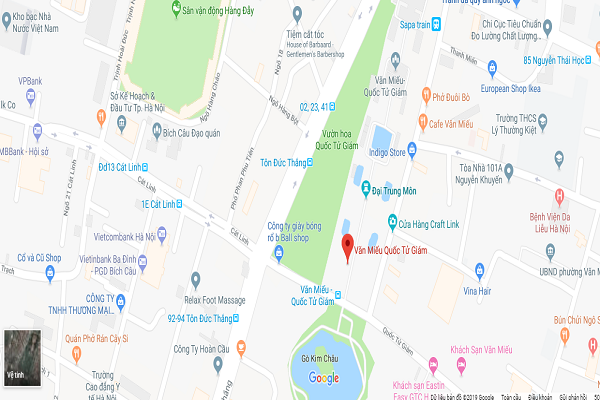
Địa chỉ: 58 Quốc Tử Giám, Đống Đa, Hà Nội. Văn Miếu nằm ở khu vực quận Đống Đa, Hà Nội, ngay giữa 4 phố chính gồm Nguyễn Thái Học, Tôn Đức Thắng, Văn Miếu và Quốc Tử Giám. Nếu xuất phát từ Hồ Gươm, các bạn đi theo đường Lê Thái Tổ, rẽ phải vào đường Tràng Thi, đi về phía đường Cửa Nam, Nguyễn Khuyến rồi rẽ trái vào đường Văn Miếu là đến. Vì đường Hà Nội có rất nhiều đường một chiều, đặc biệt là xung quanh khu Văn Miếu nên các bạn nhớ để ý để tránh phạm luật giao thông nhé.
3. Di chuyển đến Văn Miếu
Để đến được Văn Miếu Quốc Tử Giám du khách có thể lựa chọn một trong các cách như sau:
Di chuyển bằng xe bus: Với cách này du khách có thể bắt các xe bus tuyến 32, 41, 23, 38, 02 và xuống tại điểm dừng gần Văn Miếu nhất rồi đi bộ tới Văn Miếu
Lựa chọn dịch vụ xe buýt 2 tầng: Đây là dịch vụ tham quan du lịch thủ đô mới xuất hiện vài năm gần đây. Dịch vụ này không chỉ giúp bạn tham quan Văn Miếu mà còn đưa bạn đi tham quan tất cả các địa điểm, di tích nổi tiếng khác của Hà Nội rất chuyên nghiệp và tiện lợi
Sử dụng các tour du lịch nội thành bằng xe đạp: Đây là dịch vụ của các công ty lữ hành cung cấp nhằm mang tới trải nghiệm đặc biệt thú vị cho du khách khi tham quan Hà Nội bằng xe đạp
Taxi, xe ôm: Ở Hà Nội, xe ôm và taxi rất sẵn nên du khách rất dễ dàng để gọi xe tới Văn Miếu Quốc Tử Giám để tham quan khám phá
Di chuyển bằng phương tiện cá nhân: Nếu di chuyển bằng phương tiện cá nhân du khách có thể tra cứu bản đồ hoặc hỏi người dân để lựa chọn tuyến đường di chuyển phù hợp nhất tránh đi vào đường một chiều
4. Thời gian viếng thăm và giá vé
• Thời gian
Vào mùa Hè, Văn Miếu - Quốc Tử Giám mở cửa các ngày trong tuần từ 7h30 đến 17h30.
Vào mùa Đông, Văn Miếu - Quốc Tử Giám mở cửa các ngày trong tuần từ 8h00 đến 17h30.
• Giá vé
+ 30,000đ đối với người lớn.
+ 15,000đ đối với học sinh, sinh viên (có thẻ học sinh hoặc thẻ sinh viên)
+ 15,000đ đối với người khuyết tật nặng, người cao tuổi (là công dân Việt Nam từ đủ 60 tuổi trở lên, có chứng minh nhân dân)
+ Miễn phí đối với trẻ em dưới 15 tuổi
5. Hành trình tham quan Văn miếu
• Hồ Văn
Nằm ngay phía trước cổng của Văn Miếu, hồ Văn hay còn gọi là hồ Giám hoặc hồ Minh Đường là điểm cần tham quan đầu tiên khi đến thăm Văn Miếu. Theo sử sách ghi chép lại hồ Văn là một công trình hồ rộng lớn, rộng tới 1 vạn chín trăm thước nằm trong tổng thể khu du tích Văn Miếu. Giữa lòng hồ Văn là gò Kim Châu. Phán Thủy Đường được xây dựng trên gò Kim Châu. Phán Thủy Đường là nơi diễn ra các buổi bình văn chương của các nho sĩ kinh thành xưa.
Do bị bỏ sót trong phân cách địa giới hành chính cuối thế kỷ 19 đầu thế kỷ 20, Hồ Văn ngày nay chỉ còn diện tích khoảng 12,297 m2. Tuy nhiên với ý nghĩa lịch sử văn hóa lớn lao, Thành phố Hà Nội đã chủ trương lập đề án tôn tạo, khôi phục gò Kim Châu, bảo tồn Hồ Văn và đưa vào danh sách các di tích thuộc tổng thể khu di tích Văn Miếu Quốc Tử Giám.
• Văn Miếu Môn
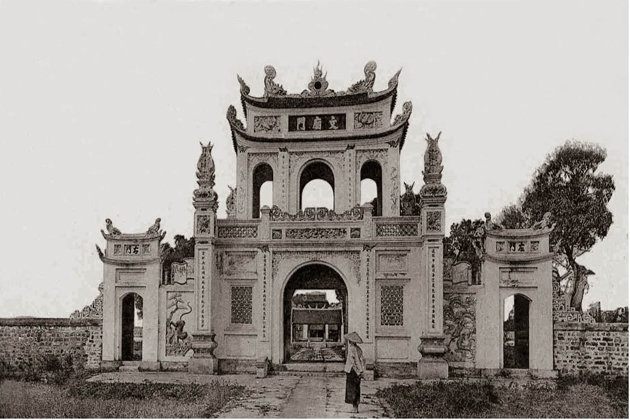
Văn Miếu Môn là cổng tam quan phía ngoài của khu di tích. Gồm có 3 cửa với cửa được xây 2 tầng cao to. Tầng trên có ba chữ Văn Miếu Môn bằng chữ Hán cổ xưa. Nằm ở phía trước Văn Miếu môn là tứ trụ nghi môn ở giữa và hai tấm bia Hạ mã hai bên. Tương truyền rằng xưa kể lại dù là khanh tướng hay công hầu khi đi qua Văn Miếu đều phải hạ võng, xuống xe ngựa đi bộ ít nhất từ tấm bia Hạ mã bên này sang tới tấm bia Hạ mã bên kia rồi mới lại đi tiếp. Như vậy đủ để hiểu Văn Miếu có vị trí tôn nghiêm trang trọng và có ý nghĩa lớn lao tới mức nào.
• Đại Trung Môn

Đại Trung Môn là cổng thứ hai của Văn Miếu đi thẳng vào qua cổng chính Văn Miếu Môn. Đại Trung Môn gồm 3 gian được xây trên nền gạch cao và lợp ngói mũi hài theo phong cách mái đình thời xưa. Trước và sau Đại Trung Môn là không gian rộng lớn đầy cây cỏ, hồ nước, những con đường nhỏ song song nối dài tạo nên cảm giác thâm nghiêm, thanh nhã, tĩnh mịch của chốn “văn vật sở đô”.
• Khuê Văn Các
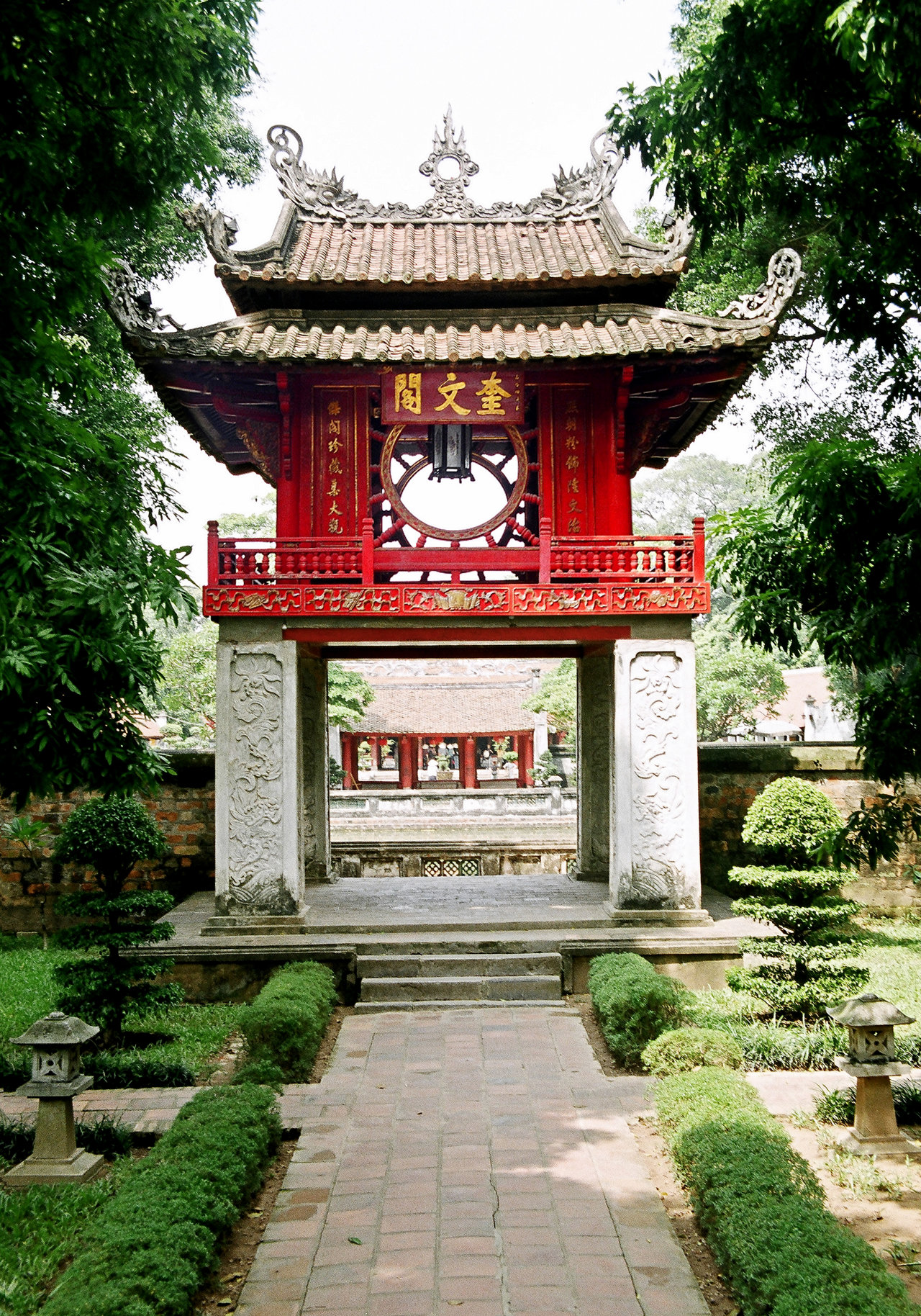
Khuê Văn Các là một lầu vuông tám mái cao gần 9 thước bao gồm 4 mái hạ và 4 mái thượng. Đây là công trình do Tổng trấn Nguyễn Văn Thành cho xây dựng vào những năm 1805 dưới triều nhà Nguyễn. Lầu gác được dựng trên một nền đất vuông mỗi bề rộng 6,8 mét.
Kiến trúc của Khuê Văn Các rất độc đáo dạng cổ lầu với tầng dưới là 4 trụ gạch vuông dài 1 mét là bệ đỡ cho tầng gác phía trên. Các trụ này đều được chạm trổ, điêu khắc hoa văn rất sắc sảo và tinh vi. Tầng trên của Khuê Văn Các là kiến trúc gỗ sơn son thiếp vàng với mái ngói đỏ chồng 2 lớp phía trên tạo thành công trình 8 mái rất đặc biệt. Bốn bên tường gác là các cửa sổ tròn được ví như mặt trời hoặc ngôi sao khuê tỏa sáng.
Khuê Văn Các là nơi các nho sĩ tụ họp để bình vịnh những áng văn chương hay của các sĩ tử đã trúng khoa thi hội. Với kiến trúc độc đáo và ý nghĩa biểu trưng cho nền văn chương và giáo dục Việt Nam, Khuê Văn Các được chọn là biểu tượng của thành phố Hà Nội.
• Giếng Thiên Quang, bia Tiến sĩ

Giếng Thiên Quang được xây dựng dạng hình vuông với ý nghĩa tượng trưng cho mặt đất. Được đặt ngay sau Khuê Văn Các với các cửa tròn tượng trưng cho trời. Hai biểu tượng này mang hàm ý tất cả tinh hoa của đất trời đều được quy tụ tại trung tâm văn hóa giáo dục giữa chốn đế đô Thăng Long xưa.
Phía hai bên giếng Thiên Giang là 2 dãy bia đá lớn được gọi là bia tiến sĩ. Mỗi bia đá là một tác phẩm nghệ thuật độc đáo, được điêu khắc tinh xảo và mang ý nghĩa tâm linh to lớn. 82 bia tiến sĩ được dựng trên lưng của 82 con rùa bằng đá xanh ghi nhận và vinh danh 82 thủ khoa trong các khoa cử của các triều đại phong kiến Việt Nam ngày xưa.
Trên mỗi tấm bia không chỉ có thông tin của vị tiến sĩ đỗ khoa cử năm đó mà còn có đầy đủ thông tin về khoa thi, triều đại, triết lý của nền giáo dục thời kỳ đó. Đây là một điểm vô cùng đặc biệt và duy nhất trên thế giới khiến cho Bia Tiến sĩ là di tích tham quan có giá trị bậc nhất trong tổng thể Khu Văn Miếu Quốc Tử Giám.
• Đại Thành Môn, khu điện thờ
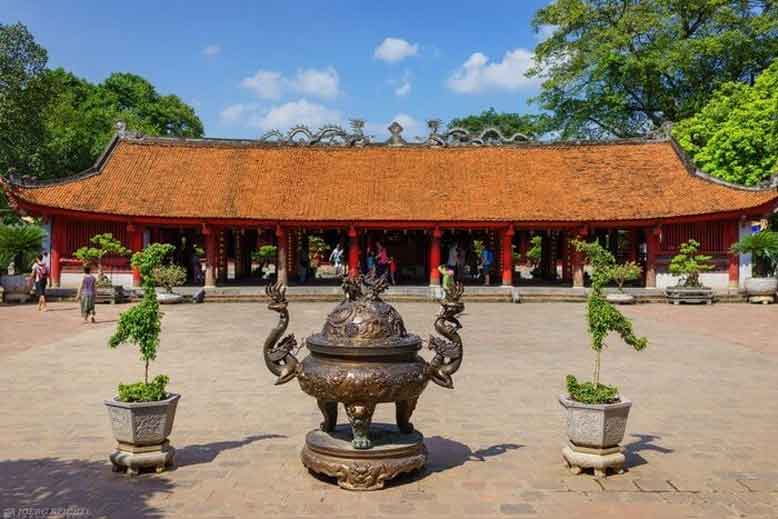
Cũng như cửa Đại Trung Môn, cửa Đại Thành Môn cũng có 3 gian với một hàng cột ở giữa và hai hàng cột hiên trước sau. Bước qua cửa Đại Thành, du khách sẽ tới một sân rộng mênh mang lát gạch Bát Tràng dẫn tới khu vực chính giữa của di tích Quốc Tử Giám là khu điện thờ Đại Bái Đường.
Đại Bái Đường gồm 9 gian nhưng chỉ có 2 tường hồi 2 bên còn mặt trước và mặt sau để trống. Đây là nơi hành lễ trong những kỳ tế tự xuân thu thời xưa. Trong Đại Bái Đường chỉ có gian ở chính giữa là có án hương thờ còn lại các gian khác đều trống.
Tòa Thượng Điện nằm song song ngay phía sau và có quy mô tương tự với Đại Bái Đường. Giữa hai công trình này là một Tiểu Đình hình vuông chuyển tiếp và kết nối. Thượng Điện gồm 9 gian trong đó 4 gian đầu hồi hai bên có cửa chấn song cố định, 5 gian ở giữa có bức bàn đóng kín ở phía trước cửa. Thượng Điện là nơi thờ những vị sư tổ của Đạo Nho. Gian chính giữa thờ Chính thánh tiên sư Khổng Tử và cách 1 gian mỗi bên lại có 2 bàn thờ. Hai gian phía bên phải thờ Nhan Tử và Tử Tư, 2 gian phía bên trái thờ Tăng Tử và Mạnh Tử. Đây là 4 vị Tứ phối. Hai gian đầu hồi thờ Thập triết gồm các vị Chu tử, Suyền Tôn tử, Ngân tử, Tề tử, Hữu tử, Bốc tử, Trang tử, Đoan mộc tử, Nhiễm tử, Mẫu tử.
• Đền Khải Thánh
Đền Khải Thánh là công trình nằm sau cùng của khu di tích Quốc Tử Giám xưa kia. Đây là nơi thờ tụng cha mẹ Khổng Tử là Thúc Lương Ngột và Nhan Thị. Khu này thời trước là khu cư xá với 150 gian phòng dành cho giám sinh hay còn gọi là khu Thái học nơi rèn đúc nhân tài cho nhiều triều đại. Tuy nhiên đến năm 1946 trong một lần bắn phá đại bác của thực dân Pháp khu này đã bị phá hủy toàn bộ. Sau đó Đền Khải Thánh được cho xây dựng mới và được bảo tồn cho đến ngày nay.
• Nhà Tiền đường, Hậu đường
Nhà Tiền đường Hậu đường là công trình được trung tâm thiết kế tu bổ di tích xây dựng mới hoàn toàn năm 1999.
Nhà Tiền đường gồm 9 gian là nơi trưng bày truyền thống hiếu học, tôn sư trọng đạo của dân tộc thời kỳ đổi mới. Đây cũng là nơi thường diễn ra các cuộc hội thảo khoa học văn hóa nghệ thuật mang đậm bản sắc dân tộc.
Nhà Hậu đường là công trình kiến trúc gỗ 2 tầng với tầng 1 gồm 9 gian, tầng 2 gồm 5 gian. Tầng 1 là nơi thờ tụng và tôn vinh Quốc Tử Giám tư nghiệp - Danh sư Chu Văn An và trưng bày các tư liệu về Văn Miếu Thăng Long và nền giáo dục Nho học Việt Nam. Tầng 2 Hậu đường là nơi tôn thờ các danh nhân đã có công trong việc xây dựng Văn Miếu Quốc Tử Giám và có đóng góp lớn trong sự nghiệp giáo dục của Việt Nam như Lê Thánh Tông, Lý Nhân Tông, Lý Thái Tông.
6. Lưu ý khi tham quan
+ Quý khách vào tham quan di tích phải mua vé, xuất trình vé của mình tại nơi soát vé.
+ Nêu cao ý thức bảo vệ di tích, giữ gìn vệ sinh môi trường, kiến trúc, cảnh quan di tích; Không nằm, ngồi, sờ vào hiện vật, không viết vẽ lên tượng thờ, bia đá, các công trình kiến trúc, không giẫm lên cỏ, không hái hoa, bẻ cành.
+ Giữ gìn an ninh trật tự, tuân thủ các quy định về phòng chống cháy nổ; Không hút thuốc lá trong khuôn viên di tích; Không mang vũ khí, hung khí, chất độc, chất nổ, chất cháy, động vật sống… vào di tích.
+ Trang phục phù hợp, lịch sự khi tham quan di tích: Không đội nón, mũ, mặc áo ngắn, áo hai dây, quần đùi… khi tham quan nơi thờ tự; Giữ yên tĩnh tại những nơi tôn nghiêm.
+ Nghiêm cấm lợi dụng các hoạt động tự do tín ngưỡng để thực hiện các hành vi mê tín dị đoan, cờ bạc, lừa đảo…
+ Khách tham quan phải chịu trách nhiệm pháp lý đối với những tổn thất do mình gây ra đối với di tích theo quy định của pháp luật
+ Bảo vệ di tích có quyền chấm dứt chương trình tham quan với khách tham quan vi phạm nội quy.
+ Quý khách phát hiện các hiện tượng tiêu cực, yêu cầu thông báo kịp thời cho bộ phận thường trực bảo vệ di tích theo số điện thoại: 0243.7471322/ 0243.2115793.
Theo kinh nghiệm tham quan Văn Miếu Quốc Tử Giám, thời gian tham quan di tích này chỉ mất từ 1 đến 3 tiếng. Vì vậy du khách nên có một lịch trình tham quan thêm các điểm khác gần Văn Miếu như ga Hà Nội, chùa Quán Sứ, di tích lịch sử Nhà tù Hỏa Lò hoặc Tháp Hà Nội…
7. Các khách sạn ở gần Văn Miếu
• Royal Hotel
Nằm ở thành phố Hà Nội, cách Văn Miếu - Quốc Tử Giám 300 m, Royal Hotel có tầm nhìn ra quang cảnh thành phố. Trong số các tiện nghi của khách sạn này có nhà hàng, lễ tân 24 giờ, dịch vụ phòng và WiFi miễn phí. Chỗ nghỉ cũng có sân hiên, quán bar bán đồ ăn nhẹ trong khuôn viên và sảnh khách chung.
Tất cả phòng nghỉ tại khách sạn đều được trang bị máy điều hòa, TV truyền hình cáp, tủ lạnh, ấm đun nước, vòi sen, máy sấy tóc và bàn làm việc. Mỗi phòng còn có phòng tắm riêng với đồ vệ sinh cá nhân miễn phí.
Khách nghỉ tại Royal Hotel có thể thưởng thức bữa sáng kiểu lục địa.
Khách sạn nằm gần các điểm tham quan nổi tiếng như Bảo tàng Mỹ thuật Việt Nam, Chùa Một Cột và Lăng Chủ tịch Hồ Chí Minh. Sân bay gần nhất là sân bay quốc tế Nội Bài, cách đó 21 km, và Royal Hotel cung cấp dịch vụ đưa đón sân bay với một khoản phụ phí.
Giá Phòng: 300.000 – 800.000đ/phòng
Địa chỉ: 19 Hàng Cháo, Street, Đống Đa, Hà Nội
• Aira Boutique Hanoi Hotel & Spa
Nằm trong Khu Phố Pháp yên bình, Aira Boutique Hanoi Hotel & Spa có hồ bơi ngoài trời, phòng tập thể dục và khu vườn. Khách sạn này nằm trong bán kính 700 m từ Nhà Thờ Lớn, Bảo tàng Lịch sử Quân sự Việt Nam, Cột cờ Hà Nội và Hoàng thành Thăng Long. Chỗ nghỉ cung cấp WiFi miễn phí.
Du khách đi bộ 15 phút là có thể đến các điểm tham quan nổi tiếng của thành phố Hà Nội như Hồ Hoàn Kiếm, Bảo tàng Mỹ thuật Việt Nam, Văn Miếu - Quốc Tử Giám và Chợ Đồng Xuân. Sân bay gần nhất là sân bay quốc tế Nội Bài, cách Aira Boutique Hanoi Hotel & Spa 35 phút lái xe.
Nổi bật với phong cách thuộc địa, phòng nghỉ tại khách sạn được trang bị TV thông minh, bàn làm việc và phòng tắm riêng với đồ vệ sinh cá nhân miễn phí. Hầu hết các phòng đều có ban công trong khi một số phòng nhìn ra các di tích mang tính biểu tượng của Hà Nội.
Nhà hàng tại Aira Boutique Hanoi Hotel & Spa chuyên về ẩm thực Việt Nam, Nhật Bản và Quốc tế. Du khách có thể thưởng thức bữa sáng tự chọn hàng ngày.
Giá Phòng: 600.000 – 1.500.000đ/phòng
Địa chỉ: 38A Trần Phú, Hoàn Kiếm, Ba Đình, Hà Nội.
Nguồn: Sưu tầm
Hình: Sưu tầm
Hình: Sưu tầm